Portugal vs Spain
Welcome to Watch Portugal vs Spain Live Stream Online Free HD TV Coverage
Click Here To Watch Now Live Free
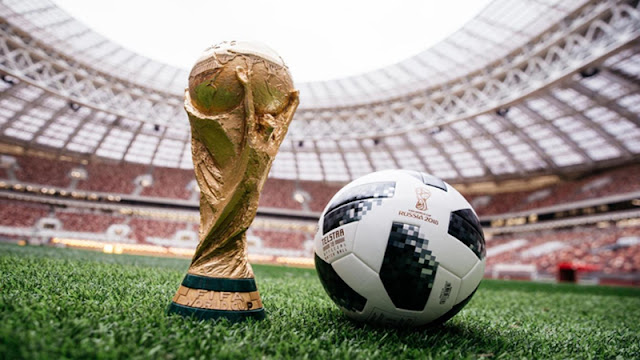

The world’s governing football body, FIFA, announced a decision on Wednesday to withdraw Fahad Al Mirdasi, a referee from Saudi Arabia, from the list of referees selected to officiate at matches of the upcoming 2018 FIFA World Cup in Russia.Al Mirdasi was earlier banned for life by the Saudi Arabian Football Federation (SAFF) for participating in the organization of fixed matches.
"With reference to the current situation of the Saudi referee Mr. Fahad Al Mirdasi, the FIFA Referees Committee has considered that the conditions to be selected for the 2018 FIFA World Cup are not satisfied anymore and therefore has decided that the selection of Mr. Fahad Al Mirdasi is withdrawn with immediate effect," the statement from FIFA said."In line with FIFA’s overall philosophy of seeking to appoint match officials together as a team of three during the preparation, the FIFA Referees Committee has therefore also decided to remove the two assistant referees Mohammed Al Abakry and Abdulah Alshalwai, who are in Referee Al Mirdasi’s team," according to the statement.
The Saudi Arabian Football Federation (SAFF) and the Asian Football Confederation (AFC) have been officially informed," FIFA added.FIFA announced on March 29 that the organization’s Referees Committee selected 36 referees and 63 assistant referees, representing 46 different countries, for the 2018 FIFA World Cup in Russia.The FIFA-approved list included a trio of specialists from Russia, namely referee Sergey Karasev and assistant referees Anton Averianov and Tikhon Kalugin. Last time a Russian referee worked at the FIFA world championships was at the 2006 FIFA World Cup in Germany, where Valentin Ivanov officiated some of the matches.The 2018 FIFA World Cup kicks off in 14 days with the opening match in the Russian capital of Moscow.
Russia selected 11 host cities to be the venues for the matches of the 2018 World Cup and they are Moscow, St. Petersburg, Sochi, Kazan, Saransk, Kaliningrad, Volgograd, Rostov-on-Don, Nizhny Novgorod, Yekaterinburg and Samara.The matches of the 2018 World Cup will be held between June 14 and July 15 at 12 stadiums located in the 11 mentioned above cities across Russia. Two of the stadiums are located in the Russian capital.Talk of rising output from the world’s top two oil exporters wiped out this month’s rally in WTI and nearly erased Brent’s, which had been fueled by concerns that supplies from Iran and Venezuela will shrink. Yet, as questions swirl around the June meeting, OPEC and its allied producers concluded that the crude market re-balanced last month.
West Texas Intermediate for July delivery dropped $1.15 to settle at $66.73 a barrel on the New York Mercantile Exchange. Futures’ fifth straight session of declines is the longest such stretch since February. There was no settlement Monday for WTI because of the U.S. Memorial Day holiday, and all trades will be booked Tuesday.WTI closed below a key technical level Tuesday, it’s 50-day moving average. This tends to be viewed as a bearish signal.
Brent futures for July settlement rose 9 cents to end the session at $75.39 a barrel on the London-based ICE Futures Europe exchange after earlier falling as much as 1 percent. The global benchmark traded at a $8.66 premium to WTI for delivery the same month.Energy ministers from Saudi Arabia, the United Arab Emirates and Kuwait plan to meet on Saturday to discuss OPEC matters, according to people with direct knowledge of the matter. Oman’s Oil Minister Mohammed Al Rumhi may join, they said.
“I’m guessing that such a meeting would lead to some sort of practical applications of production increases,” said Thomas Finlon, director of Energy Analytics Group LLC in Wellington, Florida. Meanwhile, June’s OPEC meeting “is around the corner,” he said.Oil in New York headed for its longest run of losses in more than three months as Saudi Arabia and Russia consider raising output.
Futures dropped as much as 3.1% on Monday, following a 4% slump Friday. Saudi Arabia and Russia have signaled they’ll restore some of their curtailed output after OPEC and allied producers concluded they’ve succeeded in draining a global glut.The rout that started last Tuesday has wiped out all of oil’s gains in May. Futures reached a 3 1/2-year high earlier in the month as U.S. President Donald Trump renewed sanctions on Iran and the Venezuelan crisis deepened.
“The market is now pricing in the possibility that OPEC is going to raise production,” Phil Flynn, an analyst at Price Futures Group in Chicago, said by phone. An 800,000- to 1-MMbpd increase would “barely” offset the expected loss from Iran and Venezuela but “the market is taking that as a big increase.”WTI for July settlement fell $1.77, or 1.2%, to $66.68/bbl at 12:32 p.m. on the New York Mercantile Exchange. Trades will be booked Tuesday for settlement purposes because of the U.S. Memorial Day holiday. Total volume traded was about half the 100-day average.
Brent futures for July fell $1.13 to $75.58/bbl on the London-based ICE Futures Europe exchange. The global benchmark crude traded at a $8.87 premium to WTI for the same month, on course to close at the widest gap since March 2015.
Higher crude prices are starting to affect demand, Daniel Yergin, vice chairman of consultant IHS Markit Ltd., said on Friday. He was echoing concerns voiced a week earlier by the International Energy Agency, which advises major oil-consuming nations. U.S. President Trump last month criticized OPEC for contributing to higher crude.
OPEC and its allies are likely to gradually raise oil output in the second half, Saudi Energy Minister Khalid Al-Falih said last week at the St. Petersburg International Economic Forum in Russia. He and his Russian counterpart Alexander Novak said that while scaling back the supply caps was “on the table,” no decision had been made.
The group has to decide unanimously whether to adjust output, said Suhail Al Mazrouei, energy minister of the United Arab Emirates and holder of OPEC’s rotating presidency. “No decisions made by two countries or three countries are going to be taken,” he said Friday in an interview in St. Petersburg. “We respect all the member countries.”
President Vladimir Putin said last week that oil prices at $60 fully suit Russia and the country doesn’t want them to spiral higher. Anything above that level “can lead to certain problems for consumers, which also isn’t good for producers,” he said. OPEC and his nation don’t plan to stick to existing output cuts, he said.Oil headed for its longest run of losses in almost four months as Saudi Arabia and Russia said they are discussing reviving output to ease consumer anxiety after prices jumped to levels last seen in 2014.
Brent futures that traded above US$80 a barrel last week slumped near US$75 in London on Monday (May 28), while crude in New York dropped 3.1 per cent. Saudi Arabia and Russia signalled they will restore some of the output they halted as part of a deal between Opec and its allies that went into effect in January last year. Still, with opposition from several producers, it is not clear whether the group will reach a consensus when it meets in Vienna next month.
Oil earlier in May rose to a 3½-year high after US President Donald Trump decided to renew sanctions on Iran and as plunging Venezuelan output fuelled concerns over disruptions. With the Organisation of Petroleum Exporting Countries and its partners said to have cleared a market surplus despite record American production, traders now are weighing whether Saudi Arabia and Russia will implement their plan without finding a compromise with allies.
"The latest signal from Opec and Russia cooled down expectations for the group's cuts, which have been a major factor boosting crude prices since late last year," Satoru Yoshida, a commodity analyst at Rakuten Securities, said by phone from Tokyo. "If Opec and allies decide at the June meeting to maintain their production cuts through December and ease anxiety among investors, crude prices may rebound."
West Texas Intermediate for July delivery fell as much as US$2.08 to US$65.80 a barrel on the New York Mercantile Exchange and traded at US$66.79 at 3.55pm in Tokyo. There is no settlement on Monday because of the US Memorial Day holiday. Trades will be booked on Tuesday for settlement purposes. Prices dropped US$2.83 to US$67.88 on Friday, the biggest loss since July 5. Total volume traded was about 109 per cent above the 100-day average.
Brent futures for July settlement dropped as much as US$1.95 to US$74.49 a barrel on the London-based ICE Futures Europe exchange. Prices on Friday lost US$2.35 to US$76.44. The global benchmark crude traded at a US$8.92 premium to WTI for the same month, on course for the widest close since March 2015.
Futures for September delivery fell 3.1 per cent to 462.4 yuan a barrel on the Shanghai International Energy Exchange. The contract dropped 1.6 per cent to 477.4 yuan on Friday.
DEMAND WORRIES
Higher crude prices are starting to affect demand, Daniel Yergin, vice-chairman of consultancy IHS Markit, had said on Friday. He was echoing concerns voiced a week earlier by the International Energy Agency (IEA), which advises major oil-consuming nations.
Opec and its allies are likely to gradually revive oil output in the second half of the year, Saudi Energy Minister Khalid Al-Falih said at the St Petersburg International Economic Forum in Russia last week. He and Russian counterpart Alexander Novak said earlier that while scaling back the supply caps is "on the table", no decision has been made.
Excess cuts amounted to about 740,000 barrels a day in April, according to estimates from the IEA. Without compensating supply from other members, this number looks likely to expand as the US reimposes sanctions on Iran and the collapse of Venezuela's oil industry worsens.
Separately, President Vladimir Putin said oil prices at US$60 fully suit Russia and the country does not want them to spiral higher. Anything above that level "can lead to certain problems for consumers, which also isn't good for producers", he said. Opec and his nation do not plan to stick to existing output cuts, he said.
Saudi Arabia and Russia's potential policy shift does not materially change Goldman Sachs Group's bullish oil outlook, the bank's analysts, including Damien Courvalin, said, reiterating the bank's forecast of Brent at US$82.50 per barrel in the third quarter.Russia and Saudi Arabia are hammering out the terms of a deal to jointly increase oil production—a move that sent prices sharply lower on Friday and that extends, at least for now, a crucial role for Moscow in influencing global prices.
The coordination represents the first time Moscow has moved beyond a temporary deal it struck two years ago with Riyadh and OPEC, the cartel of some of the world’s biggest producers, to tighten supplies.
That 2016 agreement worked. It whittled away the world’s excess supply of stored crude, helping to boost international prices as high as $80 a barrel last week, up sharply from a long trough in which crude traded as low as about $25 a barrel. Now, officials from the Organization of the Petroleum Exporting Countries, Saudi Arabia and Russia have all agreed that it is time to loosen the taps again.
Top oil officials from the two countries on Friday said they saw eye to eye on the need to boost output, triggering the selloff. U.S. benchmark crude fell $2.83, or 4%, to $67.88 a barrel in afternoon trading in New York. The London-traded international benchmark fell $2.35 a barrel, or 2.98%, to $76.44.
Until now, Russia’s role in the pact was to serve, temporarily, as a big addition to OPEC’s already prodigious leverage over global markets. OPEC pumps about one in every three barrels the world consumes. But even that weight wasn’t enough to help lift prices after they cratered in 2014, thanks in part to new U.S. shale production that swamped markets.
Saudi Arabia, Russia and the U.S. are the world’s top oil producers. Including Russia and a handful of other big, non-OPEC producers in cutbacks allowed the cartel to hold back a bigger share of output than it could have done on its own.
By discussing potential production increases, not just cuts, this time around, Moscow is graduating to a more integrated decision-making role, alongside OPEC’s de facto leader, Saudi Arabia, in determining how the cartel meters oil to sway prices.
OPEC Secretary-General Mohammed Barkindo said Friday the group planned to “institutionalize” its deal with Russia. While it is unclear how concrete or detailed any new deal would be, the current talks on output increases will extend and deepen Russia’s commitment to acting alongside OPEC in times when prices are too low, and in times like today when they appear too high.
That could be anew irritant to Washington. For decades, the U.S. has relied on Riyadh, as OPEC’s biggest producer by far, to steer the group, which alsoincludes Iran, toward keeping oil markets stable and acting to rein in prices during supply crises. That trust doesn’t extend to Moscow, and the new oil-policy cooperation between Russia and Saudi Arabia will add a fresh layer of complexity to the relationship among all three countries.

Comments
Post a Comment